

 Design Ledger
Who acted?
Necessary for responsibility. It does not show the outcome.
I design instruments that connect declared intention to action, evidence, and outcome. Each one makes the work measurable, keeps authority with the person, and leaves a record others can examine.
Declared intention · Observable change · Verifiable record
Start with Time Foundation to read the science, Design Ledger to explore the applications, Sealed Energy to understand evidence cycles, or Polaris to see how AI supports continuity. Select a system below to see its role.

The public application layer. Design Ledger turns protocol infrastructure into products, services, publications, and access people can use.
designledger.coNecessary for responsibility. It does not show the outcome.
Necessary for lineage. It does not prove the declared intention survived.
Connect the original declared intention to action, evidence, and resulting state.
Across a career in complex programmes, I watched them finish without a reliable way to show whether their intended change survived the work. Design taught me to listen to people. Technology gave me the means to build. CTP/IP joined both into a system that remembers why work began and accounts for what followed.


The measurement stays attached to a declared intention and a piece of work. Approved human signals can provide context, but the system evaluates the cycle, never the value, identity, or citizenship of the person.
Only software runs live today. Every other domain is specified and open to licensing and Labs.
It states its edge in writing: no claim on inner states, identity, or unproven outcomes.
Authority stops at its own contract, never a vendor or jurisdiction. Corrections are numbered and kept.
These concepts bring time, causal evidence, and active context into familiar objects. They support attention and judgement without taking either away.
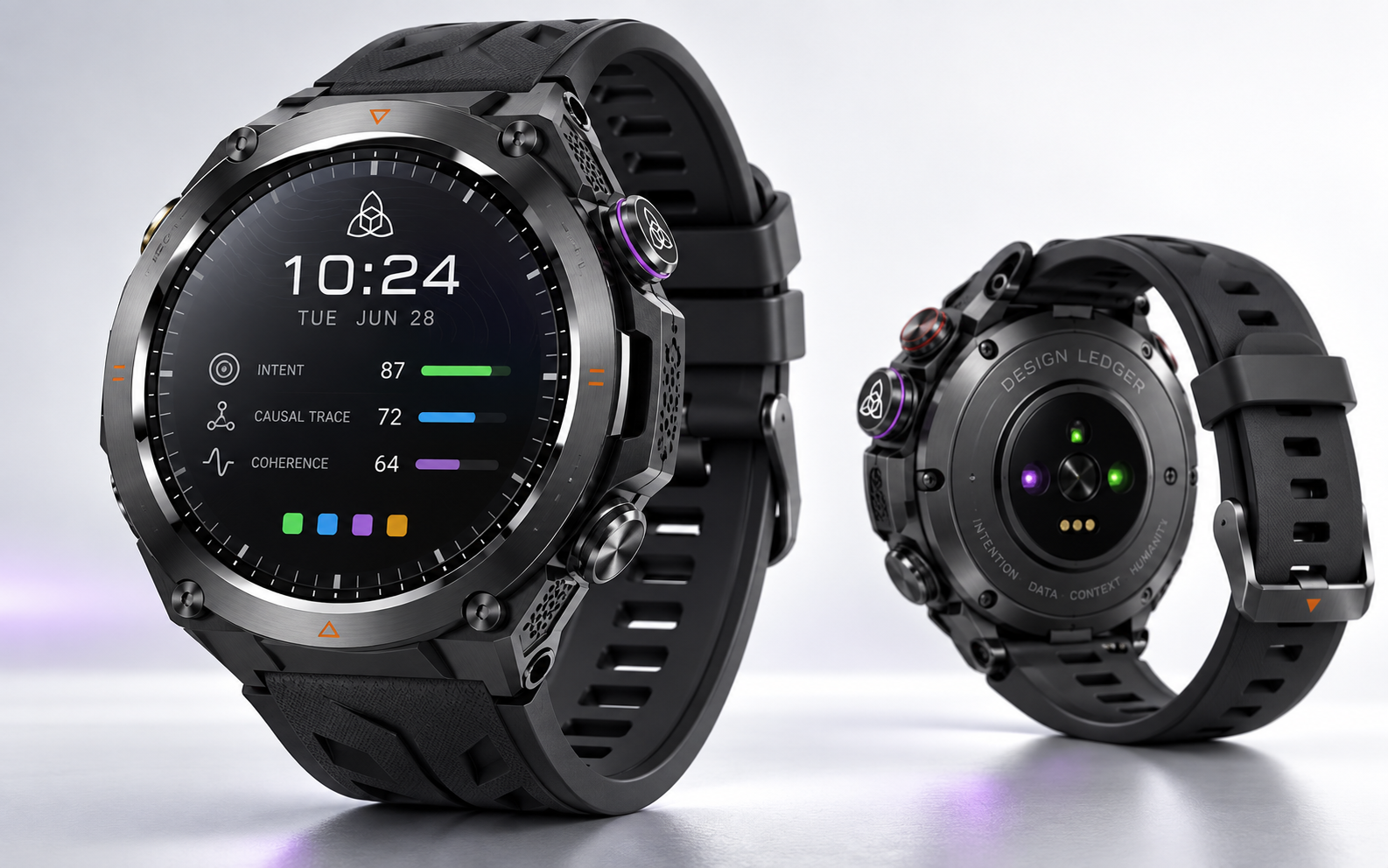
Declare an intention, mark witnessed moments, and read the causal trace of a piece of work. The instrument measures the cycle, not the wearer.
Witness systems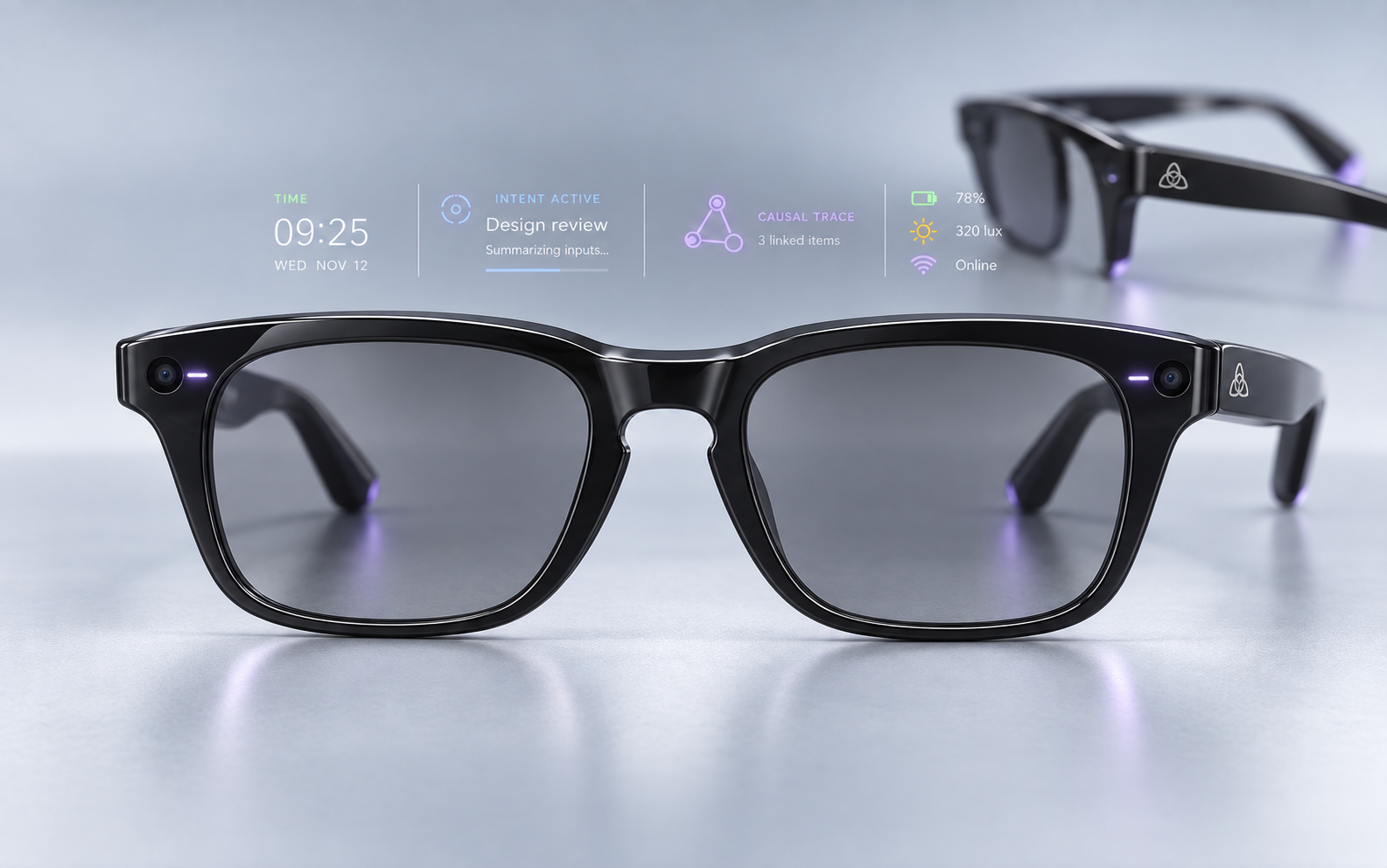
Keep the active declared intention, trusted context, and next decision in view. The display supports the person; it does not decide on their behalf.
Witness systems